PAE vs UroLift,
which one fits
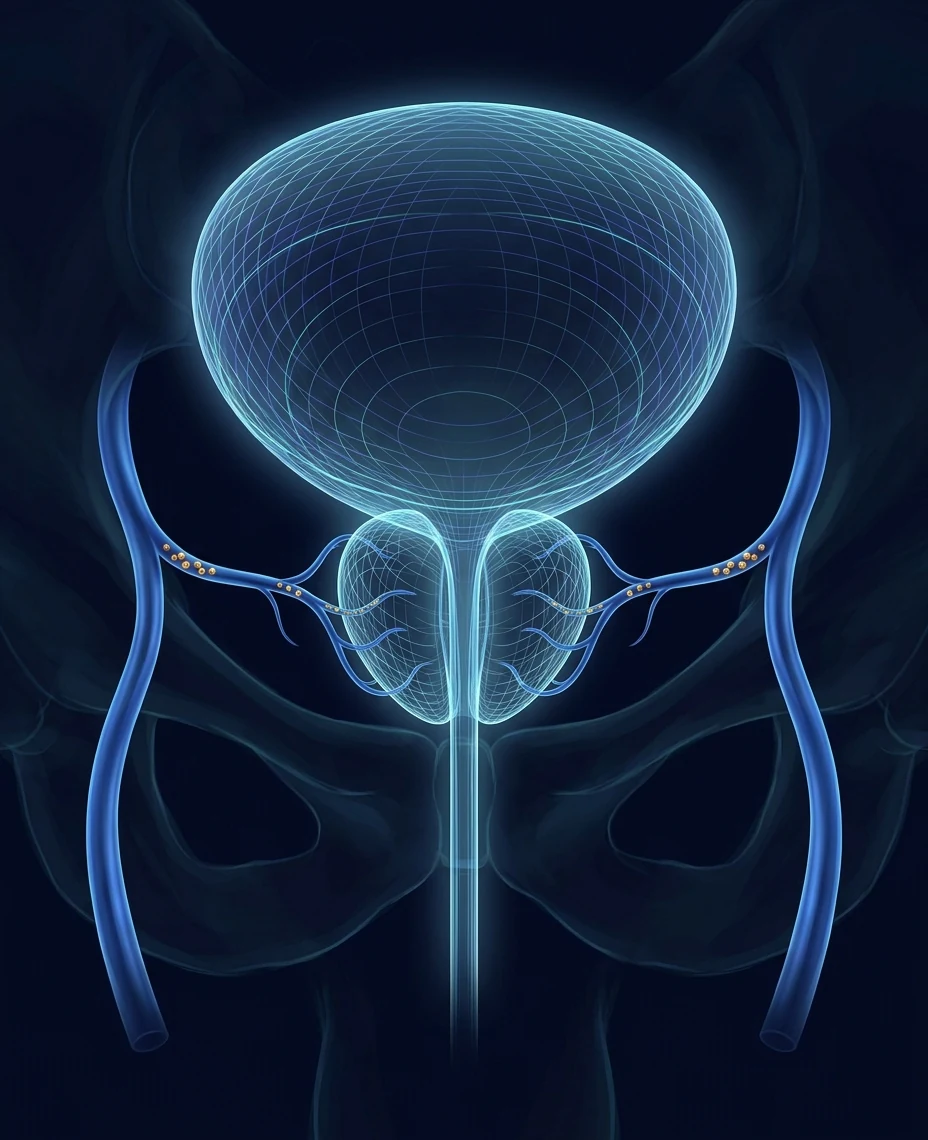
Two of the most popular ways to treat an enlarged prostate without traditional surgery, and they could hardly work more differently: tiny implants that hold the channel open within minutes, or shrinking the whole gland through its blood supply. Dr. Sawkar offers both.
Medically reviewed by Hari Sawkar, MD, board-certified urologist · Updated September 2026
The honest answer
UroLift is an office procedure done under local anesthesia. Tiny permanent implants pull the enlarged lobes apart and hold the channel open, so flow often improves right away, usually with no catheter and a return to routine within days. Its sweet spot is a small to moderate gland without a prominent median lobe.
PAE is an outpatient procedure done under light sedation, through a pinhole in the wrist or groin. Microspheres reduce the prostate's blood supply and the whole gland, median lobe included, shrinks over 4 to 12 weeks. Nothing is implanted, nothing enters the urethra, and it works across the full range of prostate sizes.
A fair rule of thumb: for a smaller gland and a man who wants the fastest office fix with immediate effect, UroLift is hard to beat. For a larger gland, a prominent median lobe, or a man who wants nothing left behind, PAE usually makes more sense. Neither closes the door on future options.
Side by side
| PAE | UroLift | |
|---|---|---|
| Setting | Outpatient, home the same day | Office |
| Anesthesia | Light sedation | Local only |
| What is done | Microspheres shrink the whole gland | Implants hold the lobes open |
| Left in the body | Nothing | Small permanent implants |
| When symptoms improve | Gradually, over 4 to 12 weeks | Often right away |
| Catheter afterward | Usually none | Usually none |
| Prostate size | Any size, including very large | Best for small to moderate glands |
| Median lobe | Treated along with the rest of the gland | A prominent median lobe can limit candidacy |
| Back to routine | About a day | Within days |
| Blood thinners | Often no need to stop them | Usually paused briefly |
General patterns, not a promise. Gland size and shape decide much of this, which is exactly what the consultation measures.
When UroLift genuinely wins
Dr. Sawkar's practice is a UroLift Center of Excellence, so when the anatomy fits, this is a superb option.
Office visit, local anesthesia
No sedation means no driver, no fasting, and the least disruption of any procedural option.
Immediate improvement
The implants open the channel on the spot, so relief does not wait on the gland shrinking.
The right-sized gland
For small to moderate prostates without a prominent median lobe, results are quick and reliable.
Nothing cut, heated, or removed
A purely mechanical fix with a fast recovery, done in a single short office visit.
When PAE genuinely wins
Large or very large glands
PAE's effectiveness does not fall off with size, which is where implant-based options reach their limits.
A prominent median lobe
PAE shrinks the median lobe along with the rest of the gland instead of working around it.
Nothing left behind
No implants, no hardware, no urethral instruments. The gland simply gets smaller.
Blood thinners and higher risk
PAE often proceeds without interrupting anticoagulation, a practical advantage for cardiac patients.
Common questions
Which one lasts longer
Both have durable multi-year results, and in both groups some men choose a second treatment down the line. Because PAE shrinks the gland itself while UroLift holds tissue aside, the honest answer depends on your anatomy and how your prostate grows over time, which is part of the consultation conversation.
Do the UroLift implants cause problems later
The implants are small, biocompatible, and well tolerated, MRI scans remain possible under standard conditions, and they do not prevent any future treatment if more is ever needed.
Can I have one after the other
Yes, in either order. Neither procedure burns a bridge: men who want more improvement after UroLift can have PAE, and vice versa, along with every other option.
How do I find out my prostate size and shape
Simple imaging at the consultation, typically ultrasound and sometimes MRI or a quick scope exam, measures the gland and shows whether a median lobe is present. That one visit usually settles which option fits.

One visit settles it
Gland size and shape decide most of this comparison, and both are measured in a single consultation. Same-day and next-day appointments are available, with telehealth for the first conversation. For the fastest response, send the office a secure message; the reply comes back by text.
Chief of Urology, Providence St. Joseph Hospital · UroLift Center of Excellence · Orange County's highest-volume Aquablation surgeon