Remove the tumor,
keep the kidney
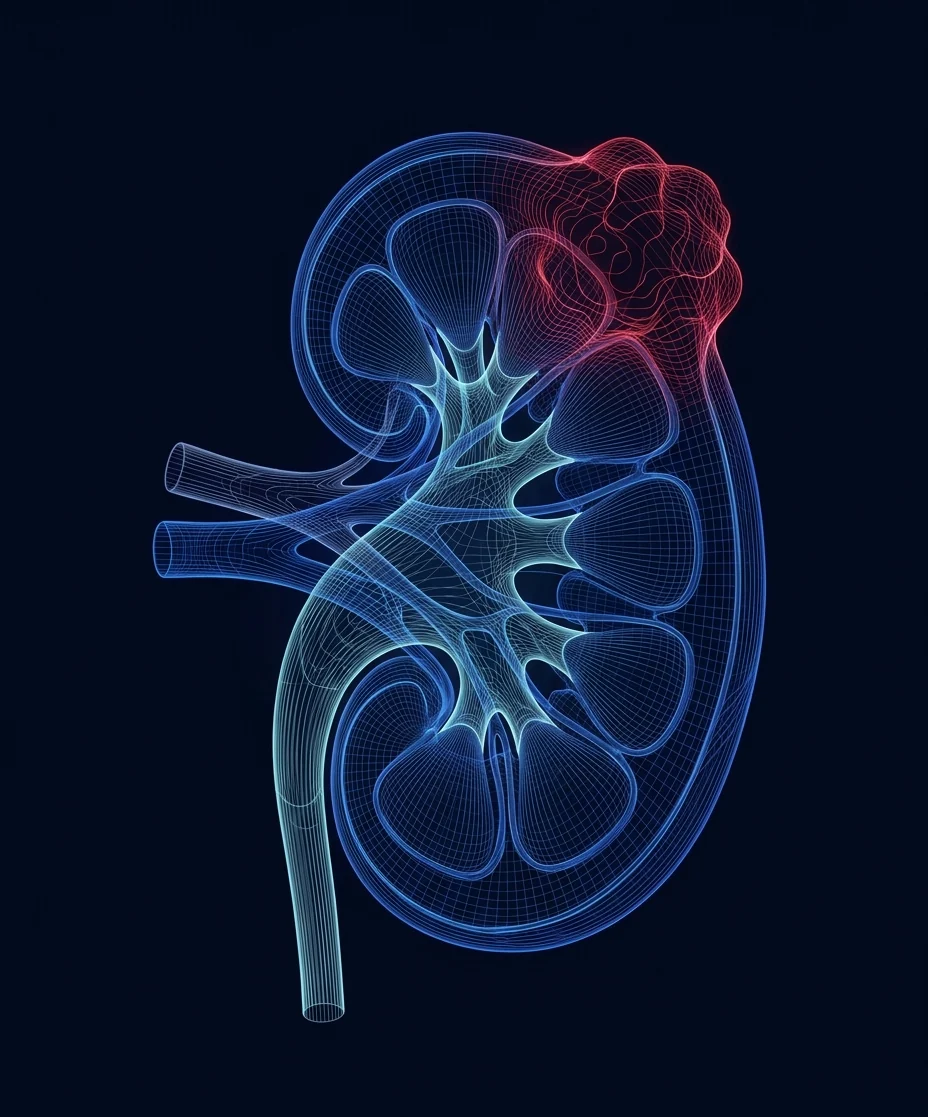
Most kidney tumors can be removed while sparing the healthy kidney around them.
Medically reviewed by Hari Sawkar, MD, board-certified urologist · Updated October 2026
Sparing the kidney, not just removing the cancer
For decades, kidney cancer often meant removing the entire kidney. Today, when the tumor allows, only the cancer and a small margin are taken out, leaving the rest of the kidney working. Robotic surgery makes it possible through a few small incisions instead of a large open one.
How robotic partial nephrectomy works
Using the da Vinci robotic platform, Dr. Sawkar removes the tumor and a thin margin of tissue while leaving the healthy kidney intact. Magnified 3D vision and wristed instruments allow the precise dissection and reconstruction that nephron-sparing surgery demands.
Because the work is done through a few small incisions rather than a large open one, blood loss is reduced and recovery is quicker. Preserving kidney function matters for the long run, lowering the future risk of kidney disease.
Diagnosis and imaging
CT or MRI defines the tumor's size and position, and how much healthy kidney can be preserved.
Surgical plan
For small masses, the plan may be a biopsy, active surveillance, or ablation; when surgery is the right call, we map out a partial nephrectomy where possible, reserving full removal for when it is safer.
Robotic tumor removal
The tumor and a thin margin are removed through small incisions, sparing the healthy kidney.
Recovery
Smaller incisions mean less pain and a faster return to normal activity than open surgery.
Why men and women choose Dr. Sawkar
Kidney function preserved
Partial nephrectomy removes the cancer while keeping the working kidney, which protects long-term health.
Robotic precision
Magnified 3D vision and wristed instruments allow the fine dissection and reconstruction the kidney requires.
Minimally invasive
A few small incisions replace open surgery, reducing blood loss and discomfort.
Faster recovery
Most patients recover and return to daily life noticeably sooner than with a traditional open approach.